Pew Nguyen
When Play Stops
Heat delays, afternoon storms, and the specific drama of August weather in Queens — what happens and what to do
The US Open runs in August because that's when the US Tennis Association schedules it, and August in New York is not mild. The average high in Flushing in late August is 29°C; it routinely exceeds 35°C during the first week. Humidity compounds this. The USTA has an extreme heat policy — when the wet-bulb globe temperature on the outer courts exceeds the threshold, outdoor play is suspended for at least an hour.
The heat policy
The heat policy applies to outer courts only. Arthur Ashe and Louis Armstrong both have retractable roofs and climate control — they continue regardless. If you're in the main stadiums, a heat suspension affects the match only if it was already scheduled for an outer court. If you're on the outer courts when the policy is invoked, you have an hour or more to move to a shaded area, get food, or head inside.
The announcement is made over the public address system. It does not mean the session is cancelled — it means a temporary pause. Most heat suspensions in recent years have lasted 60–90 minutes.
The afternoon storms
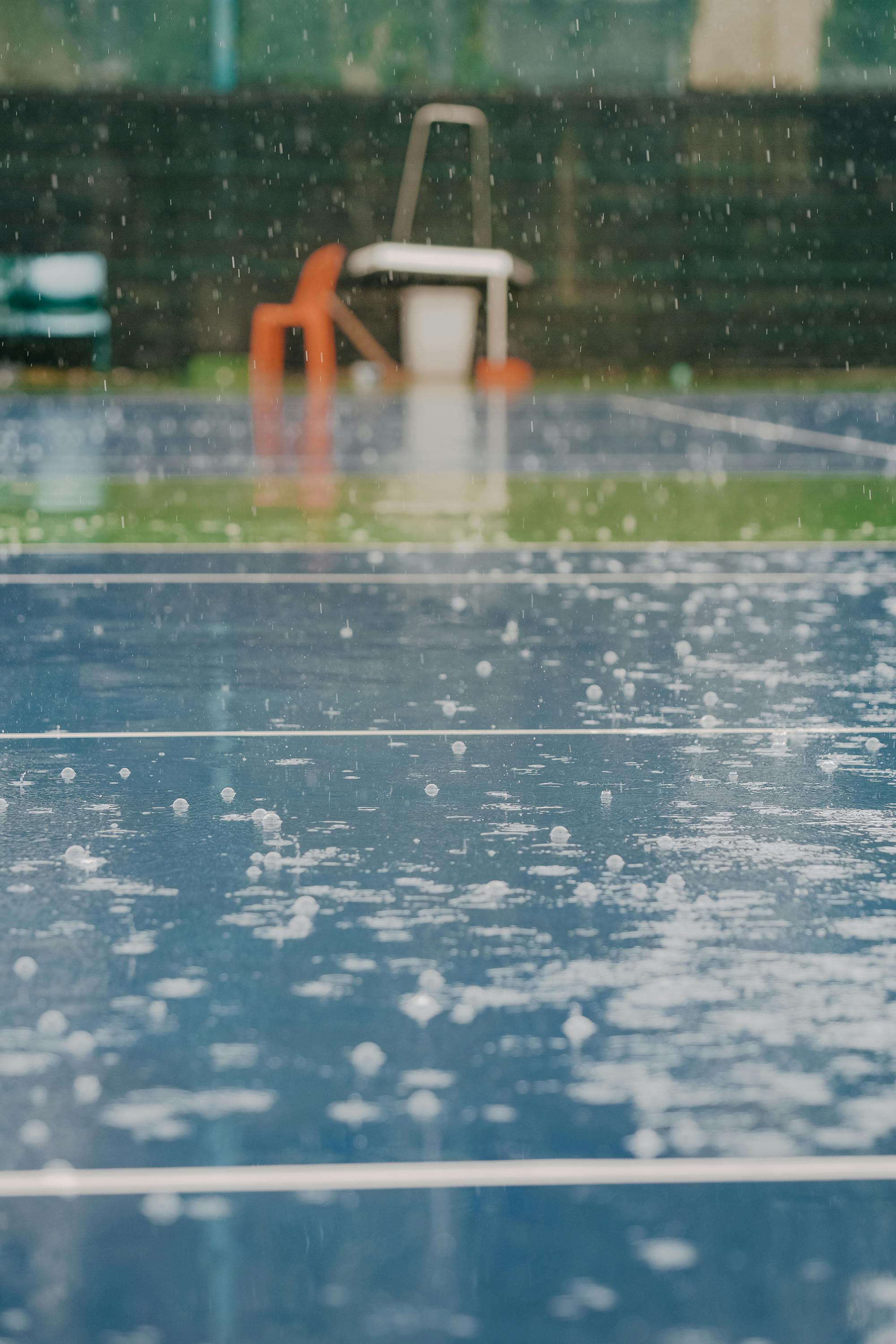
More dramatic and less predictable than the heat: the August thunderstorms that roll in from the west across the East River. These arrive fast, sometimes with very little warning, and when they come they are serious — lightning, heavy rain, and zero visibility for 20–40 minutes, then clearing just as suddenly. The USTA's weather monitoring is advanced, and play is suspended before conditions become dangerous.
When an outdoor match is paused for rain and the roof courts are available, the USTA typically moves priority matches to Arthur Ashe or Louis Armstrong. If you're watching an outer court match that gets rained out, check the Ashe or Armstrong session schedule — your match may have moved rather than been cancelled.
What to do during a delay
The concourse stays open. The food vendors continue serving. Covered areas under the stadium structures can hold the crowd comfortably. The US Open app (free to download) shows real-time match status and revised schedules as they're announced. The delay is often when the better conversations happen — there's a specific social quality to a group of people waiting out a storm under the Arthur Ashe concourse, watching the lightning over Queens.
Why it's special
Wimbledon's version of this is the rain delay — a British cultural ritual with its own rules (take cover, wait, watch the Henman Hill crowd scatter under the same umbrellas they brought knowing this would happen). The US Open version is hotter, louder, and more New York about it. Thunderstorms in August in Queens arrive without much apology and leave the same way.
The experience of being at the US Open when the weather turns is specific. The crowd doesn't disband — it reorganises. The concourse fills up, the umbrellas come out, people buy drinks and wait. There's a reason the US Open crowd has a reputation: it's New York, and New Yorkers don't leave because of the weather.
Insider tips
- 1
Download the US Open app before you arrive. It shows real-time court status and revised match assignments — if your match has moved from an outer court to Arthur Ashe or Armstrong due to weather, the app tells you before the PA does.
- 2
When the heat policy is invoked, check whether your match has moved to a roofed stadium rather than assuming it's postponed. The USTA often relocates priority matches rather than delaying them.
- 3
The concourse stays open during all weather delays and the food vendors continue serving. A rain delay is one of the better times to eat — the queues are shorter and you're already sheltered.
- 4
Afternoon thunderstorms in August typically arrive from the west between 2pm and 6pm. If the sky to the west is dark at lunchtime, check the forecast before heading to an exposed outer court for the afternoon session.
- 5
The heat suspension affects outer courts only. Arthur Ashe and Louis Armstrong are air-conditioned with retractable roofs and are unaffected — if you're in the main stadiums, a heat policy announcement is not your problem.
Practical info
What to avoid
Don't leave the grounds when weather turns — delays resolve faster than they seem, and the atmosphere on the concourse during a storm (people comparing notes, eating, watching the lightning over Queens) is one of the accidental social pleasures of the event. Don't assume a heat suspension cancels the day; it pauses outdoor play for a defined period, typically 60–90 minutes, and the main stadiums continue regardless. Don't get stranded without the US Open app — the PA system covers the grounds but revised schedules and court moves are posted on the app faster than any other channel.