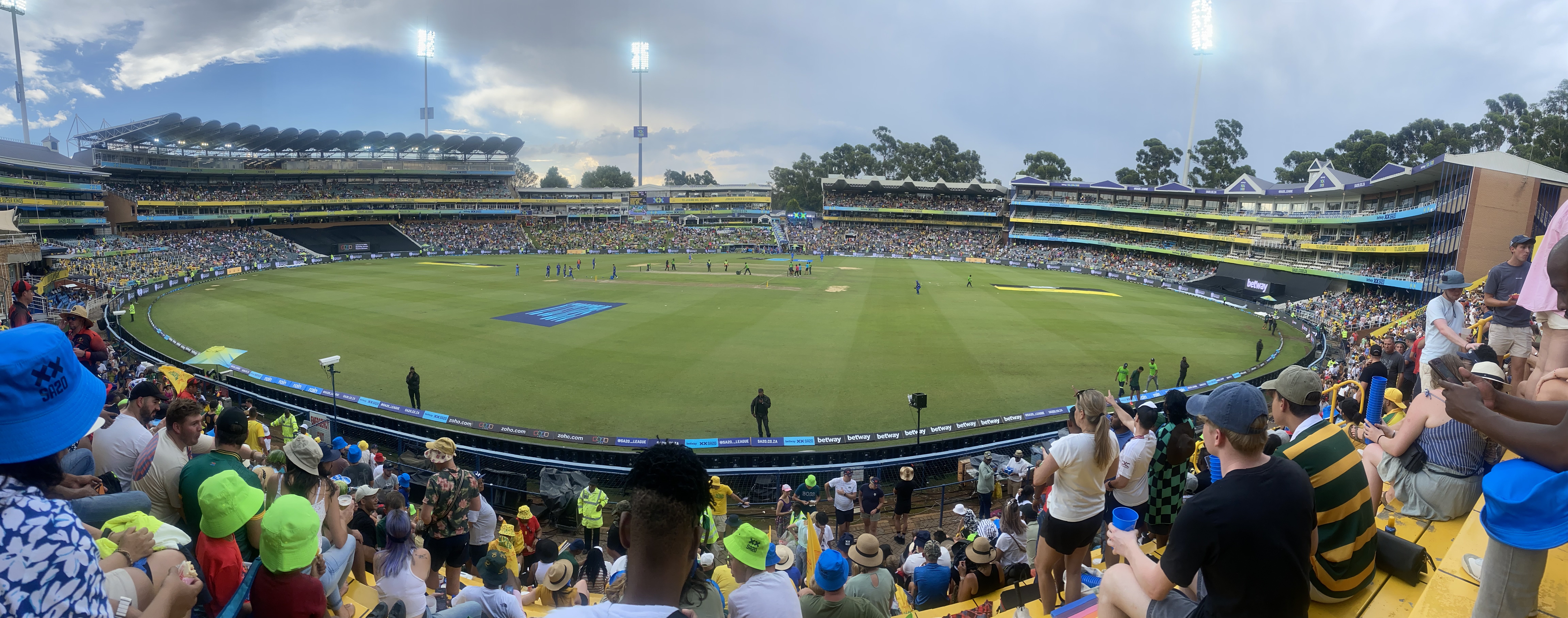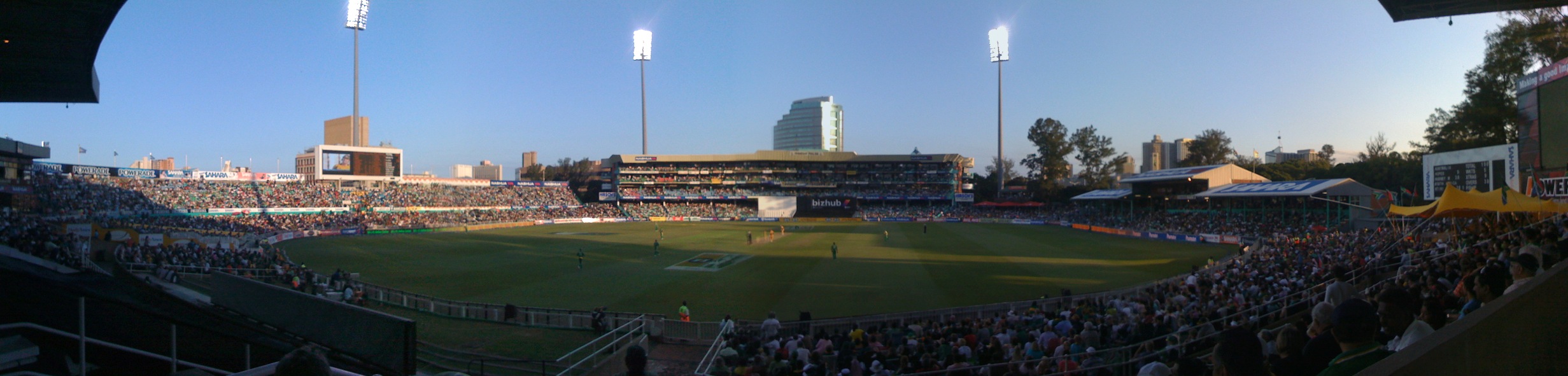
Marc Forrest, CC BY 2.0
Kingsmead — Cricket by the Beach
Test cricket a stone's throw from the Indian Ocean, with a pitch local folklore says the tide can change
Kingsmead has hosted Test cricket since January 1923, when England and South Africa played out a draw here, and again in 1939, when England and South Africa played a "timeless Test" that ended in a draw only because England had to catch the boat home. That's how long this ground has been part of the international game.
What makes Kingsmead distinctive is location. It sits little more than a stone's throw from Durban's Indian Ocean coastline — a 25,000-seat stadium within walking distance of the city's famous beaches. The ground has long been renowned as a seamer's wicket, and there's a genuine, long-running piece of local folklore attached to it: because the pitch is laid slightly below sea level, some maintain that when the tide comes in during the late afternoon, the water table rises and offers unexpected movement to seam bowlers. Whether or not the science fully holds up, it's the kind of detail that's been repeated by commentators for decades.
The ground has produced real cricketing history beyond the folklore. In February 1970, South Africa demolished Australia by an innings and 129 runs here, with Graeme Pollock and Barry Richards scoring 274 and 140 respectively — one of the most one-sided results in the rivalry's history. More recently, on 19 September 2007, Yuvraj Singh hit six consecutive sixes off a single Stuart Broad over during a World Twenty20 match, a moment that's been replayed more times than almost any other over in the format's history.
Kingsmead hosts both the tour's 1st ODI on 24 September 2026 and the 1st Test from 9-13 October — the same ground, two different formats, three weeks apart. The humid Durban climate plays into both: expect seam and swing conditions early, with the coastal humidity a real factor in how the ball behaves through the day.
Why it's special
Most cricket grounds with a "unique" reputation are trading on a single quirky fact. Kingsmead has a genuine stack of them — the tide folklore, the timeless 1939 Test, the Pollock-Richards demolition, Yuvraj's six sixes — and they're not marketing copy, they're things that actually happened here across a century of international cricket.
What I find most compelling is the beach proximity itself. Most Test grounds are landlocked, formal, removed from anywhere else you'd want to be. Kingsmead puts you in walking distance of the Indian Ocean, which changes the whole rhythm of a match day — you can genuinely walk from a beachfront breakfast to your seat, and back to the water after the close of play.
Insider tips
- 1
The North Stand stays in shade for most of the day, while the South Stand's lower tier bakes in direct sun — worth factoring in for a five-day Test, not just the one-day ODI.
- 2
Look past the standard burgers-and-chips concourse fare — Kingsmead's food court also runs proper Durban bunny chow and samoosa stalls, a better match-day lunch than anything generic stadium food offers.
- 3
Durban's humidity is real and constant through September-October — bring more water than you think you'll need.
Practical info
- Hours
- 1st ODI: 24 Sep 2026. 1st Test: 9-13 Oct 2026 (five days). Gates typically open 2-3 hours before play — check ESPNcricinfo's match page or the CSA app for confirmed start times closer to the tour, since ODI and Test start times differ and can shift for weather/TV scheduling.
- Cost
- Tickets from ZAR 50 (Test, day 1) via Ticketpro — full tier breakdown to be confirmed closer to the tour
- Access
- Tickets are on sale now via Ticketpro, Cricket South Africa's official ticketing partner, at tickets.cricket.co.za — search the South Africa vs Australia event listing directly rather than a generic cricket.co.za search, since individual match pages go live separately.
- Book
Affiliate link — we may earn a small commission at no extra cost to you.
- Getting there
- Kingsmead sits close to Durban's Golden Mile beachfront, walkable from most central Durban and beachfront accommodation. Uber and metered taxis are the practical option for those staying further out, such as Umhlanga.
- Address
- Kingsmead Cricket Stadium, Walter Gilbert Road, Durban, 4001
What to avoid
Don't repeat the tide theory to a Durban local as established fact — a Kingsmead curator has gone on record dismissing it, pointing out you only need to dig about a metre down anywhere on the ground to hit water, tide or no tide. The real reason seamers get help late in the day is the coastal humidity turning muggy before the afternoon thunderstorms, not the Indian Ocean creeping in. Great story, wrong mechanism — know the difference before you repeat it as insider knowledge.