Batu Caves — 272 Steps to a Living Shrine
Free entry, a 42.7m gold statue, and mischievous monkeys. Go before 9am.
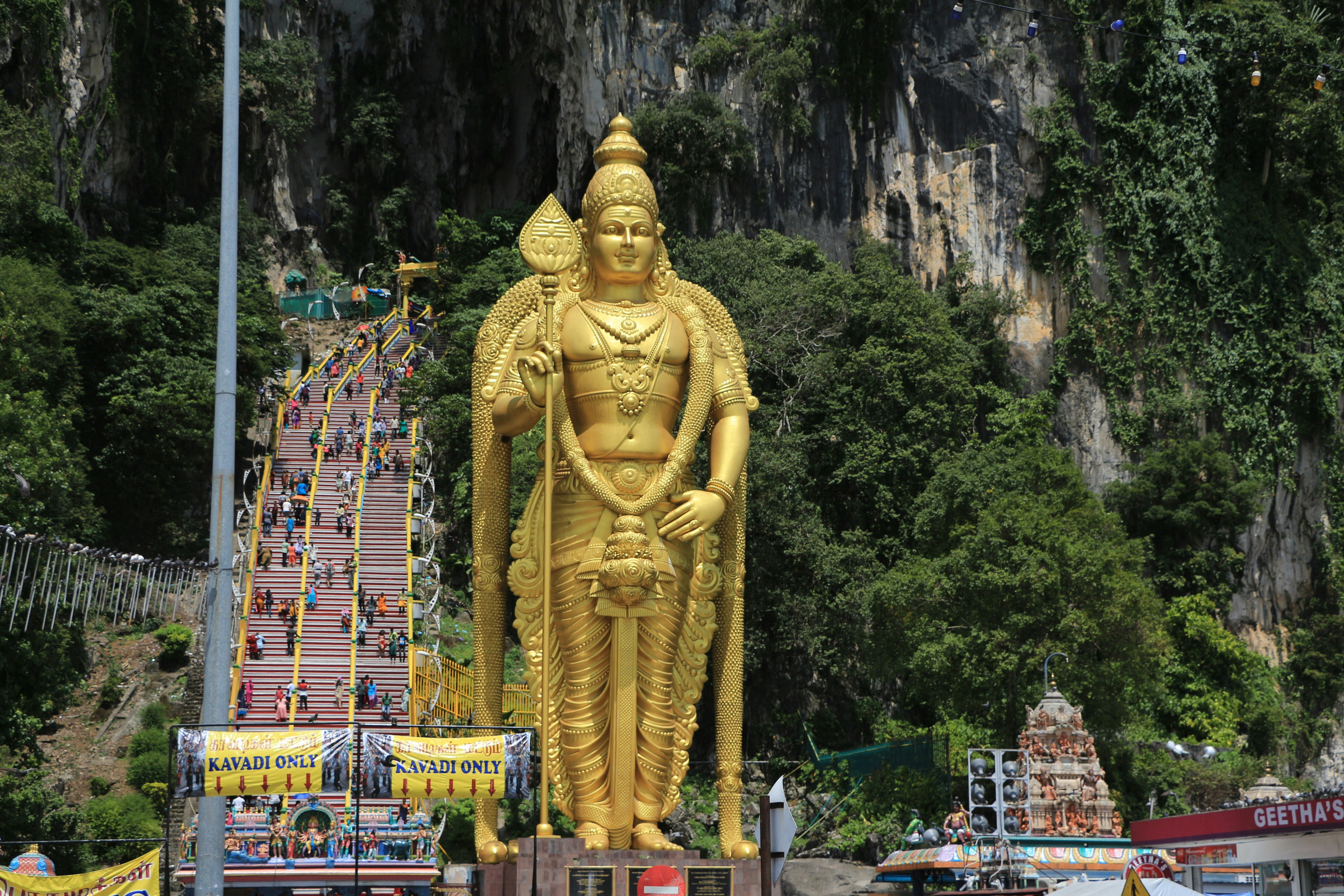
Batu Caves is a working Hindu shrine built into 400-million-year-old limestone, not a museum piece performing spirituality for visitors — and that distinction shapes everything about how to actually see it. The site's religious story began in 1890, when Tamil trader K. Thamboosamy Pillai noticed the main cave entrance resembled a vel, Lord Murugan's divine spear, and dedicated the cave to him. Wooden steps went in by 1920 to ease the pilgrimage; the 272 concrete steps that replaced them are still there today, repainted in vivid rainbow colours in 2018 and now one of the most photographed staircases in Southeast Asia.
Guarding the base of those steps is the reason most visitors actually come: a 42.7-metre statue of Lord Murugan, the largest statue in Malaysia, gold-painted and funded entirely by donations from the Hindu community over three years of construction. Climbing the 272 steps past it takes 15 to 20 minutes at an easy pace, and the Temple Cave at the top holds the shrines the whole site exists for.
Entry to the main Temple Cave is free, though the smaller caves branching off it charge separately — the Ramayana Cave runs around RM5, and a proper Dark Cave tour, exploring an undeveloped cave system with real conservation guides, starts around RM35. Dress modestly: shoulders and knees covered, with sarongs available to rent right at the entrance if you turn up unprepared.
The monkeys are real and worth taking seriously, not just a colourful detail. Long-tailed macaques live throughout the complex and have a well-documented habit of grabbing water bottles, food, and anything left visibly loose, sometimes aggressively. Keep phones zipped away, don't carry food or plastic bags in view, and don't try to take anything back from a monkey that's already grabbed it.
Go before 9am on a weekday if you can. The steps are cooler, the tour buses haven't arrived yet, and the whole site feels considerably less like a queue and more like what it actually is.
Getting there is straightforward from central Kuala Lumpur — the KTM Komuter train runs directly to Batu Caves station from KL Sentral, or a Grab from the city centre runs roughly RM20-30 each way and takes 20-30 minutes depending on traffic. Budget at least three hours for the full visit once you include the climb, the Temple Cave itself, and time to actually take in the site rather than rushing through it. If Thaipusam falls during your trip, expect the whole area transformed — over 1.5 million devotees converge on the caves for the festival, an entirely different, far more intense experience than a normal day visit.
Why it's special
It would be easy to reduce Batu Caves to its most photogenic layer — the rainbow steps, the giant gold statue — and stop there. What makes it worth visiting properly is that it's still a living site of worship, not a preserved relic; the shrines inside the Temple Cave are in active use, and the scale of Thaipusam, drawing over 1.5 million devotees annually, tells you this matters far beyond its Instagram profile.
I think that's the right frame for a first visit. Climb the steps, see the statue, take the photo everyone takes — but go in aware you're a guest at an active religious site, not a backdrop being toured. Respecting that, dressing for it, staying alert for the monkeys, is what separates actually visiting Batu Caves from just checking a box near it.
Insider tips
- 1
Zip away phones and avoid carrying food or plastic bags in view — the resident macaques are known to grab items aggressively, and you won't get them back.
- 2
Bring a sarong or rent one at the entrance if you're not dressed with shoulders and knees covered — the dress code is enforced, not a suggestion.
Practical info
- Hours
- 6am–9pm daily. Best visited before 9am on a weekday to avoid heat and tour groups.
- Cost
- Main Temple Cave: free. Ramayana Cave: approx. RM5. Dark Cave guided tour: from approx. RM35.
- Access
- No booking needed for the main Temple Cave — walk in directly. The Dark Cave tour may require booking ahead; check availability on arrival or via the site's tour operator.
- Book
Affiliate link — we may earn a small commission at no extra cost to you.
What to avoid
Don't plan a rushed 45-minute stop here on the way to somewhere else — between the climb, the cave itself, and the site's genuine scale, a real visit needs closer to three hours, and rushing it means missing most of what makes the place worth the trip.